Clear Pathways’ Regional Crisis Capacity project mapped behavioral health crisis services across the 23-county Northwest Ohio Regional Collaborative, home to 1.6 million residents. The interactive map gave the region its first shared view of a multi-county system, allowing the Collaborative to turn that view into a roadmap for coordinated investment and a model other communities can replicate.
Clear Pathways assessed high-acuity behavioral health crisis services across a 23-county region. We used those findings to build the region’s first interactive heat map to visualize where services were, and more importantly, where they were not.
With these visuals, communities have data-informed support for their hardest discussions: How can communities allocate services so that everyone experiencing a behavioral health crisis has a clear path to help?
The Challenge
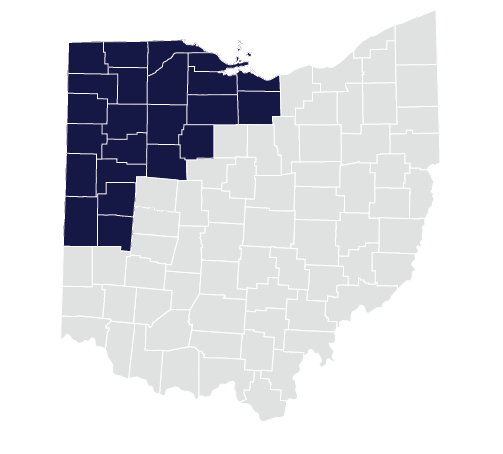
The Northwest Regional Collaborative works across Addiction and Mental Health Services (ADAMHS) Boards in 23 Ohio counties. The counties span rural and urban geographies with varying levels of service availability. The Collaborative engaged Clear Pathways to create the first-ever visualization of these services to see where people experiencing a behavioral health crisis were falling through the cracks.
What We Did
Clear Pathways built an interactive heat map—a layered view of high-acuity crisis services across all 23 counties. Services are grouped into layers, allowing users to see crisis call centers, mobile response teams, crisis stabilization, hospitals, jails, inpatient psychiatric services, and specialty courts, all color-coded by in-county availability.
What the Region Gains
Visualizing services enables the Collaborative to have data-driven, visually supported conversations about the levels and types of services in an area. The map is a delivered product and can be maintained by the Collaborative, allowing them to update service availability, add new providers, and reimport data without outside technical support.
Explore the Regional Crisis Capacity Map

Our Process
This project used a data-first approach, collecting stakeholder surveys, hosting interviews across counties, and facilitating focus groups among people with lived experience of the crisis system. We cross-checked findings from multiple independent sources, using a triangulated approach to data fidelity. We organized our analysis around the Substance Abuse and Mental Health Services Administration’s three essential elements of a crisis continuum: someone to contact, someone to respond, and a safe place for help.
The heat map transforms this data into a planning tool. Users can now see at a glance that multiple adjacent counties have no in-county crisis call center, or that the nearest stabilization option requires crossing three county lines. Community leaders now have a deeper understanding of the issues at hand, focusing the discussions where they matter most.
What Changed
This project produced six short- and long-term recommendations, grounded in data. Each recommendation names a lead, a timeline, an evidence standard, and measurable outcomes so the Collaborative can work in concert.
The heat map the first-ever shared, visual understanding of the Collaborative’s crisis system. The Collaborative can now see how services are distributed across all 23 counties. Conversations can now focus on what the highest areas of need are and track how new services affect the regional crisis continuum.
“By identifying both regional strengths and critical gaps in crisis access, mobile response, stabilization, workforce capacity, transportation, and data sharing, the project has helped us move from individual county perspectives toward coordinated regional priorities. Its findings provide a practical roadmap for targeting investments, strengthening partnerships, measuring progress, and building a more accessible, consistent, and person-centered crisis system for Northwest Ohio.” —Scott Sylak, Executive Director at Mental Health and Recovery Services Board of Lucas County